
General Contracting in Rodanthe, NC
Local General Contractor Expertise
On Hatteras Island's northern edge, Rodanthe faces unique building challenges. Coastal erosion, hurricane exposure, and strict environmental rules shape how homes are built here. We handle custom home building and renovation in this demanding landscape. Our work covers residential and commercial construction, site prep, and complete renovations. Whether you're protecting an oceanfront property or building on shifting sands near Pea Island National Wildlife Refuge, we know what works in Rodanthe, NC.
How We Work
Every project unfolds in clear, manageable steps. You know what's happening and why.
Assessment & Planning
We visit your site near the Chicamacomico Life-Saving Station or anywhere on Hatteras Island. We check soil, exposure, and permit requirements specific to coastal property.
Design & Permits
We develop plans that meet Dare County rules and Cape Hatteras setback requirements. Erosion control and environmental compliance are built in from the start.
Site Prep & Foundation
We handle lot clearing, grading, and foundation work with care for natural wetlands. Materials match the salt-spray environment of the Outer Banks.
Build & Installation
Framing, roofing, siding, windows, doors, and systems go in with quality checks at every stage. We use wind-resistant techniques built for hurricane exposure.
Finish & Inspection
Interior finishes, paint, and final systems are completed. County inspectors approve all electrical, plumbing, and structural work before you move in.
Handoff & Support
We walk you through the home, explain maintenance in the salt-air climate, and remain available if issues arise post-construction.
You'll always know what's happening next—and when.
Our Services
From new homes to renovations, we cover every aspect of construction on Hatteras Island.
Custom Home Building
We build homes from the ground up in Rodanthe and the Tri-Villages area. Every home is engineered for salt-spray durability and storm resistance. Foundation systems are elevated and reinforced. Designs respect setback rules near Pea Island.
- Elevated foundations for flood and erosion risk
- Wind-resistant framing and fastening
- Salt-resistant exterior materials
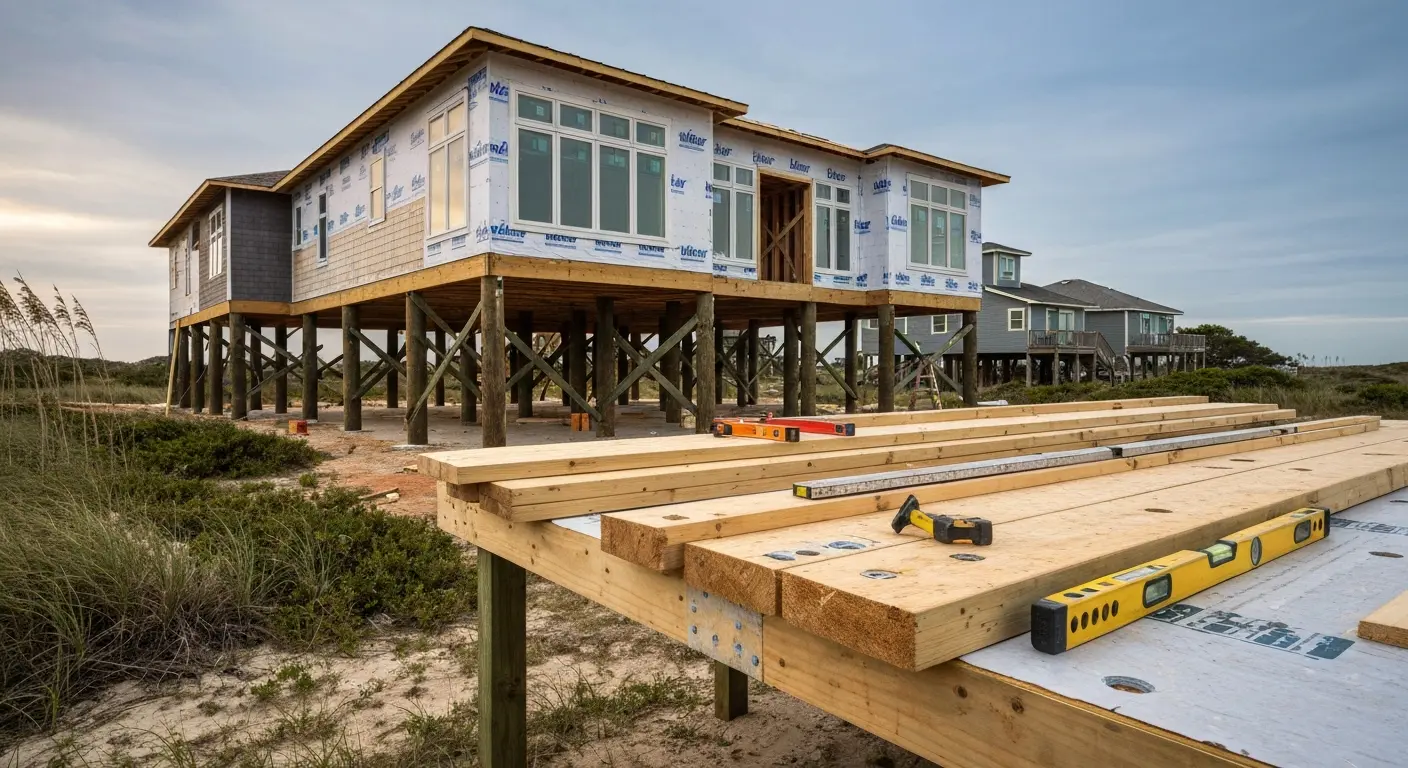
New home construction near Rodanthe with coastal-grade materials and elevated design
Whole Home Renovation
Older homes in Rodanthe need serious updates. We renovate full interiors and exteriors, upgrading plumbing, electrical, and HVAC systems. We preserve structural integrity while adding modern comfort. Work meets current building code.
- Interior and exterior upgrades
- Mechanical and plumbing system overhauls
- Structural repair and reinforcement
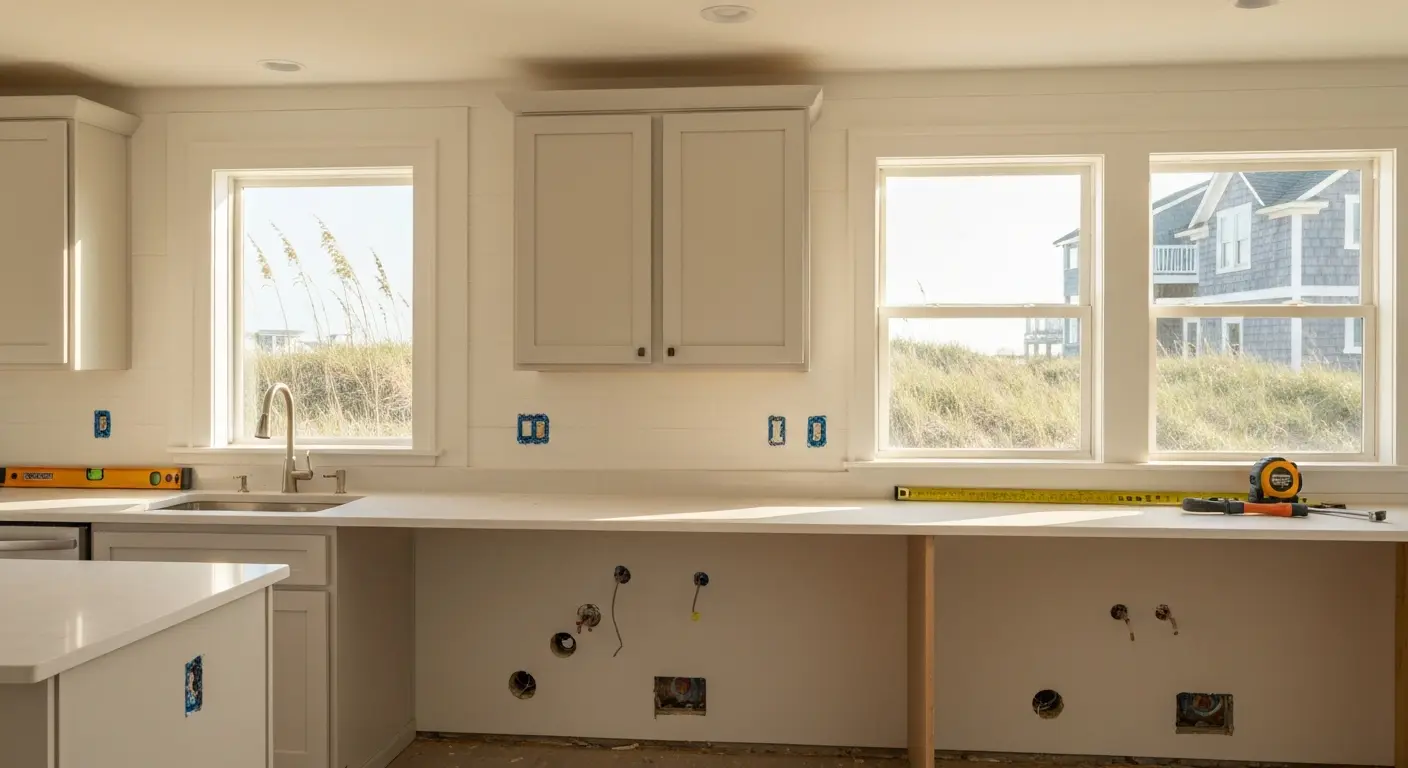
Full home renovation in Waves showing updated systems and coastal finishes
Exterior Work: Windows, Doors & Siding
Salt air and storms damage exterior elements. We replace windows, doors, and siding with materials built for the coast. All work is permitted and inspected by Dare County. Drainage and sealing prevent water intrusion.
- Impact-resistant windows and doors
- Marine-grade siding installation
- Weather sealing and flashing
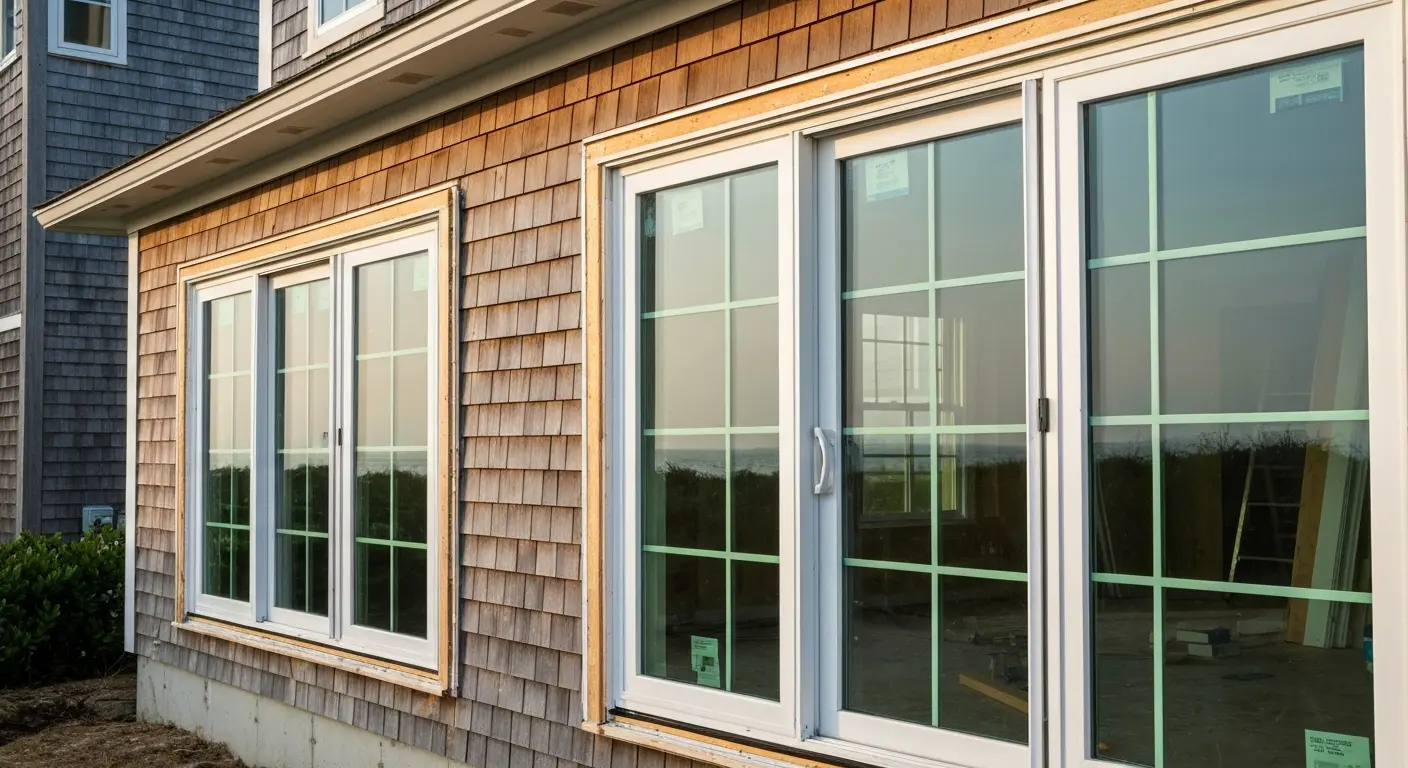
Impact-resistant windows installed in oceanfront property near Rodanthe
Site Prep & Demolition
We clear lots, remove structures, and prep land for new builds. Equipment is right-sized for island access. We handle septic, utility disconnects, and debris removal per Dare County rules. Erosion control is maintained throughout.
- Lot clearing and grading
- Structure demolition and removal
- Utility disconnect and sedimentation control
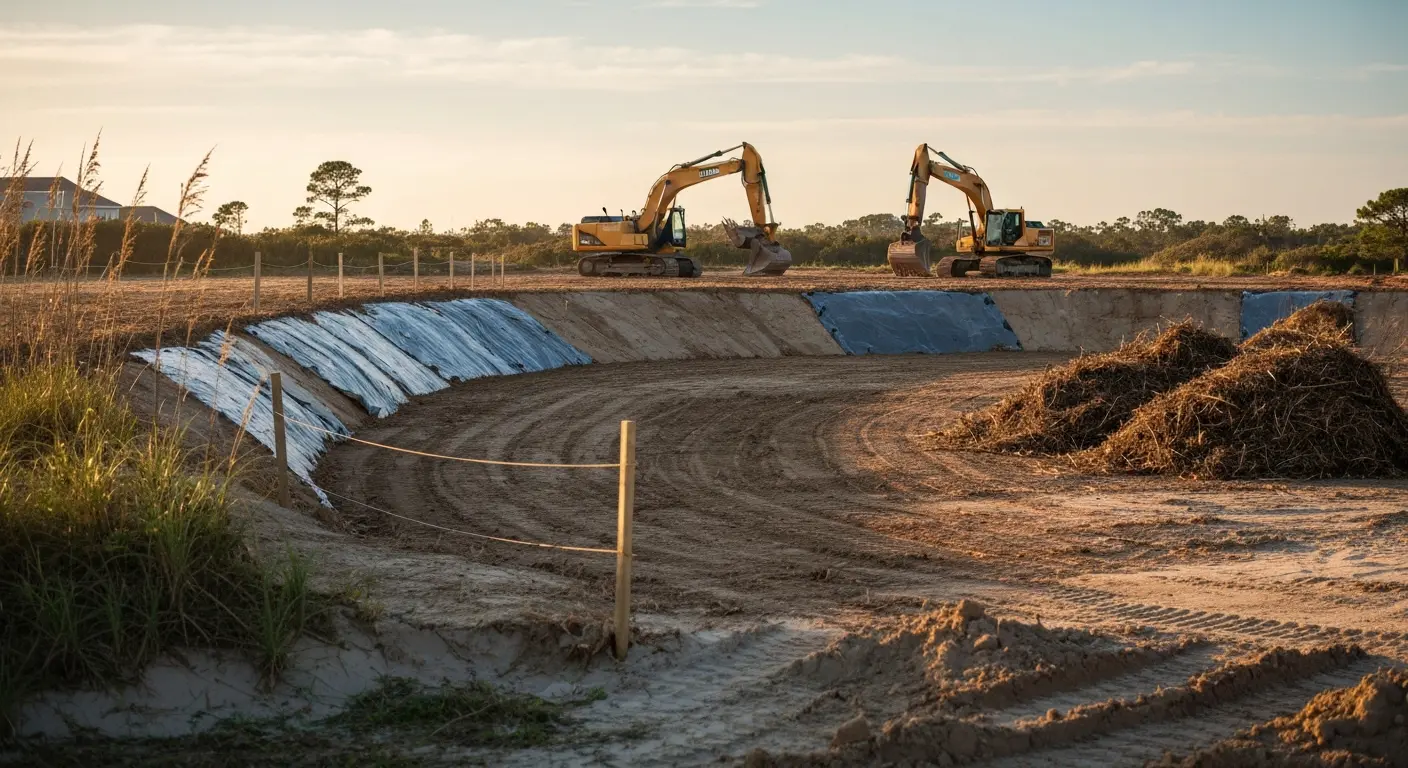
Land clearing in Salvo with erosion control measures in place
Commercial Construction
Rodanthe has growing commercial needs. We build shops, restaurants, rental offices, and tourist facilities. All projects comply with Cape Hatteras National Seashore guidelines and Dare County zoning. We work with seasonal schedules.
- Retail and restaurant construction
- Rental property management offices
- Watersports and recreational facilities
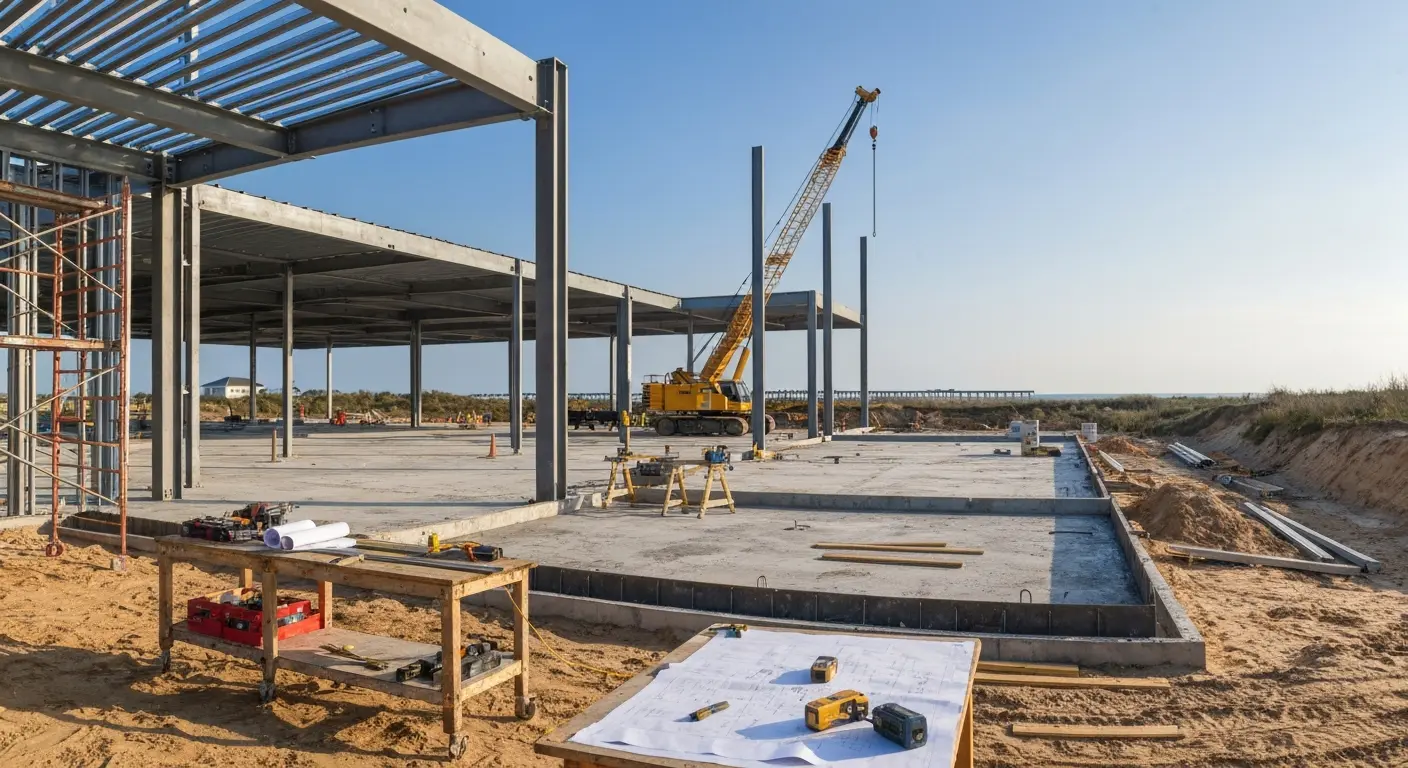
Commercial facility construction near the Rodanthe Pier
Why Local Expertise Matters
Rodanthe is not like other towns. Construction here demands specialized knowledge.
Erosion & Storm Exposure — Rodanthe sits at the northernmost tip of Hatteras Island, bordered by Pea Island National Wildlife Refuge to the north and Cape Hatteras National Seashore to the south. This location limits growth but creates real building challenges. Homes face ocean waves and sound-side wind. We design and build for these forces.
Hurricane Season Reality — The Atlantic hurricane season peaks from late August through September. Structures must withstand wind uplift, surge, and water intrusion. We use elevated foundations, impact-resistant glass, and proper fastening. No shortcuts in hurricane country.
Salt-Air Durability — Salt spray corrodes standard materials. Electrical components rust. Paint fails. Wood rots. We specify marine-grade products and finishes. Maintenance is planned in from day one.
Permits in Dare County require site surveys showing elevation, flood zones, and natural features. Erosion control plans are mandatory. Environmental assessments may be needed for work near wildlife refuges. We handle this paperwork so you don't have to.
Access & Material Supply — Rodanthe is 18 miles south of Nags Head via the new Rodanthe Bridge. Supply delays happen. We maintain strong vendor relationships and stock coastal-ready materials. Crew scheduling respects island logistics.
Your Area: Rodanthe & The Tri-Villages
Understanding the community helps us serve you better.
Rodanthe: The Northernmost Village
Rodanthe has a population of about 213 and is an unincorporated community in Dare County. It's the easternmost point of North Carolina. The historic Chicamacomico Life-Saving Station (now a museum) anchors the village's maritime heritage. The Rodanthe Pier is a local fishing landmark and meeting place. NC Highway 12 is the main corridor running north to south.
Waves & Salvo: The Tri-Villages
Waves and Salvo blend seamlessly with Rodanthe. Together, the three form the 'Tri-Villages' of the Chicamacomico Banks. Waves is known for watersports (kiting, windsurfing, paddling). Salvo offers a quieter retreat. All three share the same school district, fire/rescue service, and building inspector (Matt Kiricoples, 252.475.5877). Services are seasonal—many shops close in winter.
Building Environment
All new construction requires a Dare County building permit. Remodeling over $15,000 that affects load-bearing walls or footprint needs a permit. Septic permits are issued at the Dare County Satellite Office in Nags Head. A licensed NC general contractor is required for projects over $30,000. Environmental rules protect Pea Island National Wildlife Refuge and Cape Hatteras National Seashore. Work near these areas requires agency approval.
Parking near construction sites is tight. Access is limited to NC 12. We coordinate with neighbors and plan logistics carefully to minimize disruption during busy tourist seasons.
Frequently Asked Questions
Do I need a permit for window or door replacement?
Replacement of windows and doors under $15,000 does not require a permit in North Carolina, provided the work meets code. However, we recommend a permit when replacing exterior elements near the ocean—it protects you if damage occurs and ensures proper installation.
What makes coastal construction different from mainland building?
Salt air, storm surge, high winds, and sand erosion require elevated foundations, impact-resistant materials, marine-grade fasteners, and proper drainage. Structural engineering is more critical. Maintenance is ongoing. Standard mainland materials fail quickly on Hatteras Island.
What does Dare County require for new construction on Hatteras Island?
All new construction needs a building permit, a blue-line survey showing elevation and flood zone, water hookup authorization (or private well permit), and a septic permit from the health department. Electrical, plumbing, and mechanical work each need sub-permits. A licensed general contractor is required for projects over $30,000.
Can I renovate my rental home in Rodanthe without closing it to guests?
Projects over $15,000 affecting load-bearing walls or footprint require permits and inspections. Occupied rentals slow inspections and create safety issues. We schedule work during winter when many rentals close. Early planning is key.
How do you handle erosion control during construction?
North Carolina Sedimentation Pollution Control Act requires an approved erosion control plan for all land-disturbing activity. We install silt fences, stabilize exposed soil, manage stormwater runoff, and maintain compliance throughout the project. Inspections verify compliance before you sign off.
Will my septic system need special design for Hatteras Island?
Yes. Sandy soil drains quickly but has limited filtering capacity. High water tables are common. Septic permits come from Dare County Health Department at the Nags Head satellite office. Design must account for seasonal water level fluctuations and salt-water intrusion near the ocean.
DISCOVER WHAT OUR CUSTOMERS HAVE TO SAY ABOUT US
REVIEWS
proudly serving these areas
Avon, NC
Buxton, NC
Corolla, NC
Corova, NC
Currituck County, NC
Dare County, NC
Duck, NC
Hatteras Island, NC
READY TO take the next step?
get a free quote TODAY!
QUICK LINKS
our services
service areas
operating HOURS
Mon: 7:00 am - 7:00 pm
Tue: 7:00 am - 7:00 pm
Wed: 7:00 am - 7:00 pm
Thu: 7:00 am - 7:00 pm
Fri: 7:00 am - 7:00 pm
Sat: 7:00 am - 7:00 pm
Sun: Closed - Closed